
Arkansas Traffic Warrants Begin in Court
Every traffic citation belongs to the District Court printed on the ticket, or to a city District Court division when the matter sits on a local docket. The court may order payment, an appearance, or some other condition. Miss a hearing or a required installment, and the court can respond with a failure-to-appear or failure-to-pay action, which in some cases ends in a warrant. Nothing is automatic, though. The outcome hinges on the case, the order, and the issuing court. Arkansas District Courts handle traffic offenses, misdemeanors, local ordinances, preliminary felony matters, and limited civil claims. The state has city and county District Courts, and many city-court functions became District Court departments in 2012, so an old notice may still say city court or municipal court. Go by the court name on the citation or notice, then confirm which clerk holds the docket now. A traffic warrant stays part of that one court case. It never becomes a statewide driving-history entry.
How Traffic Warrants Work in Arkansas
A traffic warrant is issued inside a citation case, usually because someone missed a required court date or failed to meet a payment or other condition. FTA stands for failure to appear. The court weighs the facts and its own order, so the same ticket does not produce the same result every time. Little Rock Traffic Court is one local example: it warns that a missed date, a skipped payment-plan installment, or a missed report or service date can bring a warrant. That is local guidance, not a statewide Arkansas rule. To understand an Arkansas traffic warrant, keep the citation balance and the warrant decision apart. A citation can sit unpaid while a person has no idea whether a warrant was issued. A payment receipt proves money changed hands and nothing more; it does not prove a warrant was recalled or a license order was cleared. The court that handled the ticket confirms the case status, any appearance requirement, and the next step. The sheriff or other assigned agency confirms its service record. Note: A missed traffic date can trigger more than one court or license consequence, and each record has its own custodian.
The 30-Day Arkansas FTA Arrangement Window
Arkansas sets a defined path when a District Court suspends a license for failure to appear. Act 1049 of 2021 amended Ark. Code Ann. §16-17-131. The suspension starts 30 days after the court order, and the Department of Finance and Administration (DFA) mails notice. Make arrangements with the court inside that 30-day window and the court rescinds the order, with DFA reinstating the license without a fee. This process governs license status after court action. It is not a public statewide lookup for traffic warrants or failure-to-appear cases. Skip the window and the suspension may hold until the person appears and completes sentence requirements. Reinstatement charges may then apply at current rates. The court must resolve the case and rescind its order; DFA only acts on what the court transmits. A license-status letter from DFA reports license status, but it cannot certify that no warrant exists or that the citation case is finished. Ask the court what it has sent, and ask DFA about the separate license record.
Keep the records separate: §16-17-131 describes an FTA-related license action. The warrant, if one was issued, remains a court matter and needs confirmation from the issuing court.
Read Act 1049 of 2021 and the current Arkansas Code for the statutory text. The relevant court clerk can explain the order in any individual case.
How Arkansas Flags a License Hold
Arkansas publishes no statewide failure-to-appear or traffic-warrant search by name or driver number. The court creates the case order. DFA keeps the license status that flows from it. Those two records answer different questions. A blank result in a payment portal does not prove no warrant exists, and a license record cannot replace the court's docket.
| Record or Channel | What It Shows | Responsible Office |
|---|---|---|
| District Court FTA order | Case-specific order that can start a license-suspension process; not a searchable statewide warrant file | Issuing District Court |
| Driver-license status | Current licensing status after court action and DFA processing | DFA Driver Services |
| Citation and warrant case record | Ticket, court events, and any warrant disposition recorded in the case | Issuing District Court and its local clerk |
The DFA license-clearance record covers license status only. It is not warrant clearance and cannot recall a court order. The distinction matters when a suspension notice arrives and you do not know whether the court also issued a warrant.
Arkansas Traffic Warrants Are Not eTraffic Results
The Arkansas Judiciary's eTraffic service searches and pays citations for courts that take part. It asks you to pick a court, enter a name, and add either a citation number or a driver-license/state-ID number with a date of birth. Those fields pull up an eligible citation. They do not run a statewide Arkansas warrant check. The instructions spell out which courts participate, when online payment is allowed, how processing works, and the variable service fee shown at checkout. One caution deserves emphasis. Paying online generally waives the right to a trial or appearance and enters a guilty or no-contest plea, so check first whether your matter requires an appearance. DWI cases and other appearance-required matters cannot simply be paid through the portal. The amount and the service charge appear before you submit, and fees vary by transaction. If your Arkansas court is not on the list, contact it directly for its payment and appearance rules. The official eTraffic instructions lay out these conditions, and the eTraffic citation-query screen shows the court selector along with the citation and identity search paths it accepts.
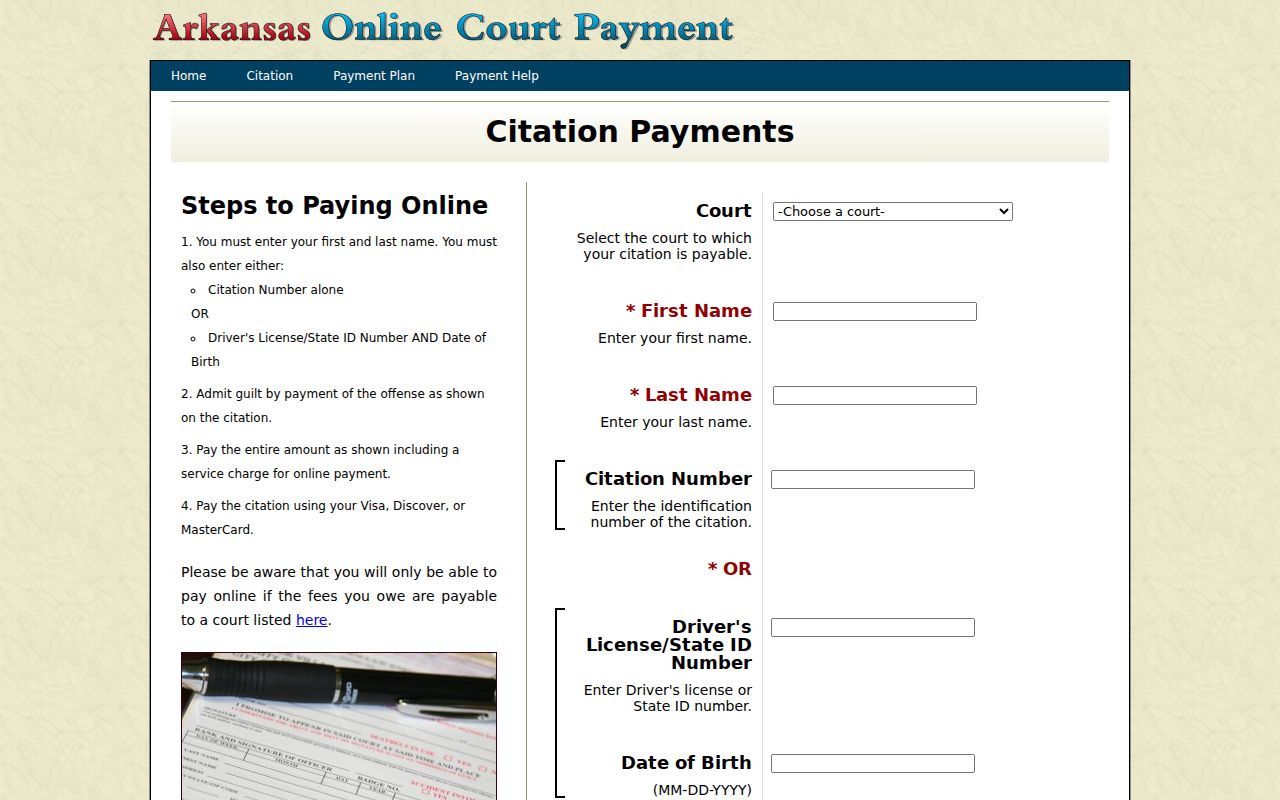
This screen is a citation-payment channel, not an Arkansas warrant index. A search result or payment confirmation still needs court confirmation if a warrant or FTA order may exist.
Arkansas Traffic Warrant Checks
Arkansas offers no public statewide search for traffic warrants or FTA holds. Start instead with what you already hold: the citation, summons, payment notice, or court name that identifies the issuing District Court. A public case search can help locate a docket. Coverage differs, though, and a docket may not display warrant status. Then ask the court clerk and the sheriff's warrant unit to confirm the order and its service status.
- Read the citation or case notice and note the court, county, case number, and any required date or payment condition.
- Search Search ARCourts for public case information when the court is represented. Some District Court information is not available online.
- Use Browse Counties to reach the local court and sheriff. Ask whether a warrant was issued, whether it is active, and what bond or appearance terms apply.
- If a case record is needed, ask the court about access under Administrative Order No. 19 (AO19), or ask the sheriff about a public-record request under the Arkansas Freedom of Information Act.
Use the exact court named on the ticket, because clerk arrangements differ across Arkansas District Courts. Some rely on the county Circuit Clerk. City divisions may use a city or court clerk instead. A sheriff's public list covers only that agency's records, never the court's full case file.
Arkansas eTraffic Does Not Map Warrant Coverage
The eTraffic participating-court list carries 45 entries, from District Courts to some Circuit Court juvenile divisions. That roster names courts accepting the portal's citation or payment-plan workflow. It does nothing more. Arkansas does not treat it as warrant coverage. It will not show which counties report warrants to ACIC, name every court issuing traffic process, or prove any warrant search complete. Some entries pair a city with a county court; others use a general court name. A court missing from the list may still take payment by mail, phone, in person, or through its own official process. So ask the court before assuming an Arkansas ticket cannot be resolved online. The roster can change. Confirm the current selector on the Arkansas Judiciary's eTraffic court roster and review the eTraffic instructions before paying.
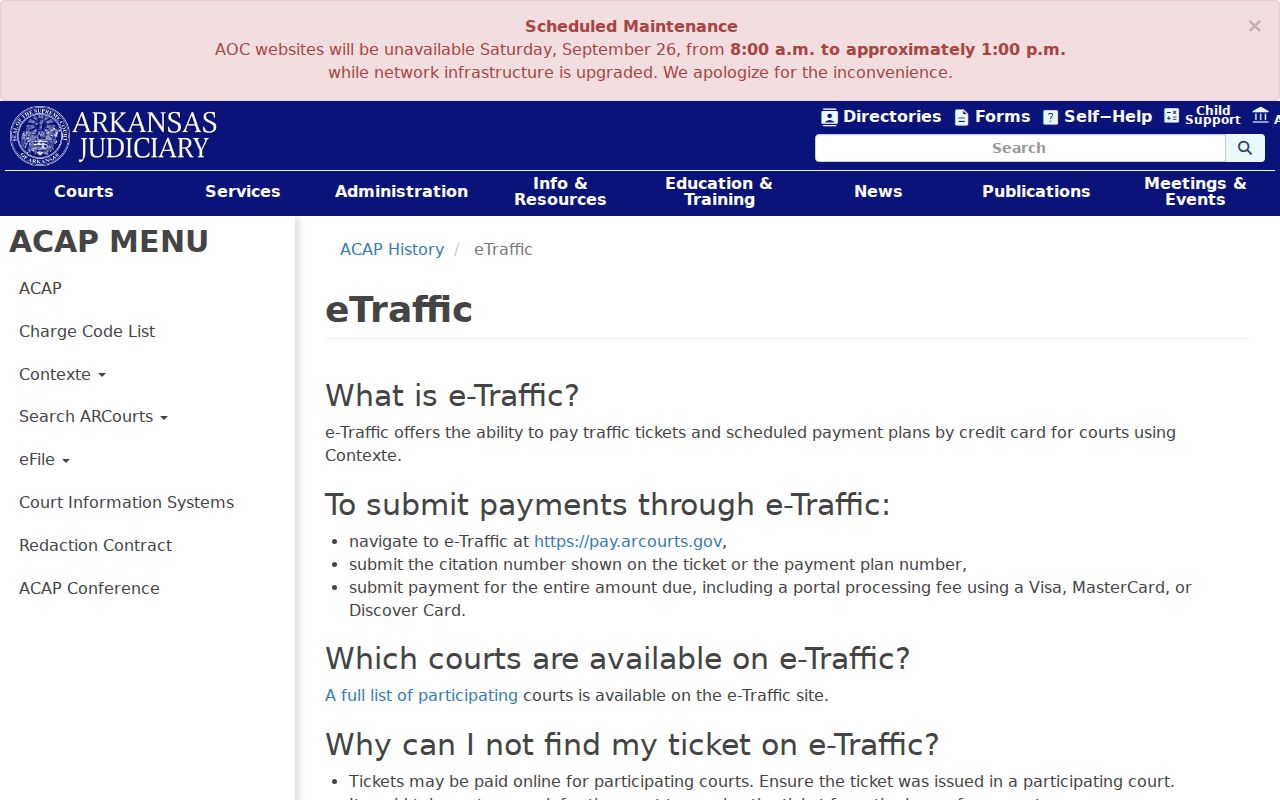
The instructions describe a narrow payment service. Paying an Arkansas ticket through them promises no automatic warrant recall and no update to a separate license record.
Clearing an Arkansas Traffic Warrant
Resolve the case with the court that issued the citation. Depending on the order, an Arkansas court may require an appearance, payment, a payment-plan arrangement, a motion, or a bond. A payment alone proves little. It does not show the court recalled the warrant. If the court does recall the order, ask whether the sheriff and DFA were notified and how to confirm each separate record.
- Contact the issuing court before taking a payment step. Confirm the warrant, next date, appearance requirement, and any bond or plan terms.
- Follow the court’s direction to appear, request a payment plan, pay an eligible balance, or ask about a motion or other case-specific process.
- Ask the clerk whether a judge must recall the warrant and whether the sheriff or other serving agency has been notified.
- If a license suspension is also involved, verify that the court rescinded its order and then check the separate status with DFA.
Before paying: Online payment can waive trial or an appearance and enter a plea. Confirm with the court first when the case requires a hearing or a warrant may already be active.
No general 'pay and lift any warrant' service exists in Arkansas. Keep your receipt or court order. It documents the transaction, not each agency's status. Walk-in rules differ by locality, so call first. Ask whether the court, a judge, the jail, or the sheriff's warrant unit handles an appearance. Find out whether counsel can arrange a date, whether bond is set, and where to post it. Bond may secure release and a next hearing. It does not dismiss the charge or prove every record has been updated. Arkansas publishes no universal recall form and no single statewide clearance fee. Note: Confirm the court record and the serving agency's record separately, because no statewide update time is published.
Arkansas Traffic Payments Do Not Clear Warrants
eTraffic also runs a payment-plan query, and it looks up one existing plan. It is not a sweep for every Arkansas traffic warrant or unpaid citation. Enter the court and the person's name, then either the plan number or a driver-license/state-ID number with date of birth. If the plan is in default, contact the court before relying on a portal result. A missed minimum payment, or a failure to notify the court as required, can lead to an FTP warrant, a license suspension, and added costs. Use the court named in the plan paperwork. When a payment fails or the displayed balance seems wrong, the issuing clerk can explain the account and any appearance or warrant status. The service fee for an online transaction is variable and shown before payment. No public timetable guarantees when an Arkansas court warrant, sheriff record, or DFA license status will update after a payment or court order. The eTraffic payment-plan query stays limited to locating a known plan. Treat any portal result as a starting point. Then confirm warrant status with the court that issued the order.
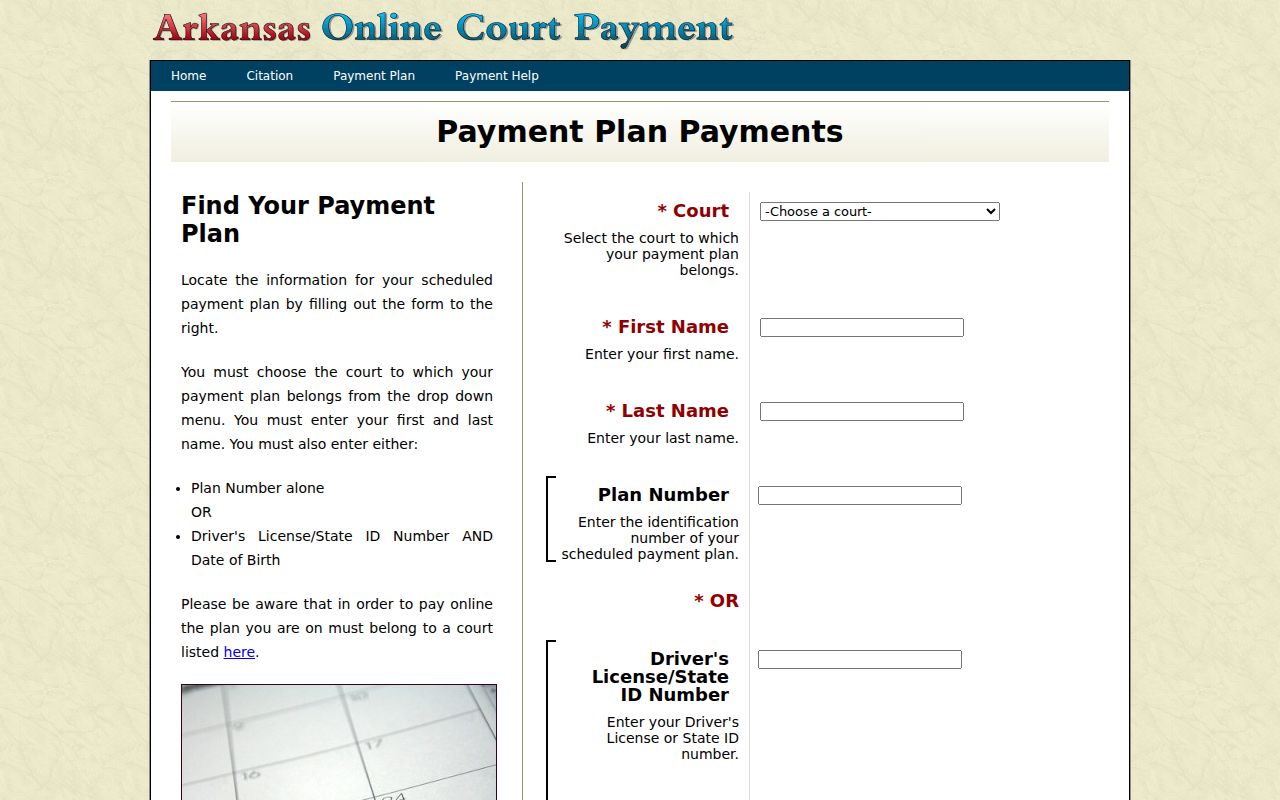
An Arkansas payment-status lookup tells you one thing only: where the account stands. It cannot confirm that no warrant exists, or that one was recalled and pulled from local service records.
Arkansas Traffic Warrant or Driver Record
Don't confuse the two records. An Arkansas traffic warrant is a court order in a case before a District Court. A driver record, kept by DFA Driver Services, covers licensing and driving history. The FTA suspension process builds its own separate license-status file. Clearing one leaves the others untouched.
| Question | Traffic Warrant or Case | License or Driving Record |
|---|---|---|
| What it answers | Whether the court issued an order and the case status | License status or driving history maintained by DFA |
| Record holder | Issuing District Court and its local clerk; sheriff may hold service status | DFA Driver Services |
| How to confirm | Ask the issuing court and serving agency | Use the appropriate DFA service |
| How it changes | Court action, then required agency updates | DFA processes the license or record request |
A DFA driving-record request is not a warrant check. For Arkansas warrant status, use the county directory to reach the District Court clerk and the sheriff handling the citation. The court record alone shows whether a warrant was issued and what resolves it. Act 980 of 2025 is a different animal. It governs Circuit Court fines and requires an ability-to-pay inquiry when a defendant claims he cannot pay. That has nothing to do with the District Court FTA process under §16-17-131. Read the official Act 980 text to see its scope; it is no statewide warrant lookup.