
How Bench Warrants Work in Arkansas
A bench warrant is process tied to a case already in front of a judge. After a missed appearance or another legally sufficient event, it can direct an officer to bring the person before the court. In Arkansas, the type of obligation shapes what happens next. Missing a court date, violating a release condition, and defying a court order each lead down different procedural paths. Not every unpaid balance or missed deadline triggers a warrant. The docket and the signed order control. The court that set the hearing keeps authority over the case and decides the next step. A sheriff or another authorized agency may hold the service record. That agency cannot decide whether the judge will recall the warrant. Anyone checking an Arkansas bench warrant should pin down the original case first. Then ask the issuing clerk about current status, any required appearance, and bond terms. That call answers what a list alone cannot.
Where an Arkansas Bench Warrant Sits
Begin with the court that set the obligation, not with any statewide warrant counter. Circuit Court handles felonies and other Circuit matters, while District Court handles much of the traffic, misdemeanor, and city-ordinance load. The local clerk varies too. A lower-court record might sit with a Circuit Clerk, a District Court clerk, or a municipal clerk depending on the county's arrangement. The Judiciary's Circuit Clerk directory points you to the right office for Circuit cases. Searching only one clerk's portal can miss a case another court holds. Pull out the citation, summons, bond paper, or case notice and read which court and county it names. Without papers, Search ARCourts may locate the case, though it does not guarantee a warrant-status field, and some District Courts are absent from it. The issuing court can steer you to the correct local clerk, and the county directory fills the gap when the court name is unclear. Note: A Circuit Clerk search alone may not resolve a traffic or city-ordinance matter assigned to a local District Court clerk in Arkansas.
Bench Warrant Issuance in Arkansas
Arkansas law does not turn every failure to appear into one automatic statewide rule. Arkansas Code §§16-85-603, 16-85-606, and 16-84-207(b)(1) cover particular indictment, failure-to-appear, bond-forfeiture, and notice processes. The court record shows which provision and order apply to your situation. Once the judge issues process, the case stays with the issuing court while the sheriff or another authorized officer handles execution. That split matters. The court can explain a hearing, a recall, or a bond condition; the serving agency can only report whether it received or served the order. A public sheriff list may not show every District Court warrant either. No single Arkansas public portal updates every court and agency record. Read the order and confirm the current docket entry before assuming a payment, a new date, or a phone call closed the matter.
Arkansas Rule 9.5 Has a Narrow Role
Arkansas Rule of Criminal Procedure 9.5 has a narrow job. It addresses certain violations of release conditions through a verified prosecutorial application. It does not make every missed hearing, payment-plan default, or traffic date an automatic warrant. A model order in the Arkansas Judiciary's forms collection illustrates the procedure and the related surety process. It is an example of an order, not a public application for clearing a personal warrant.
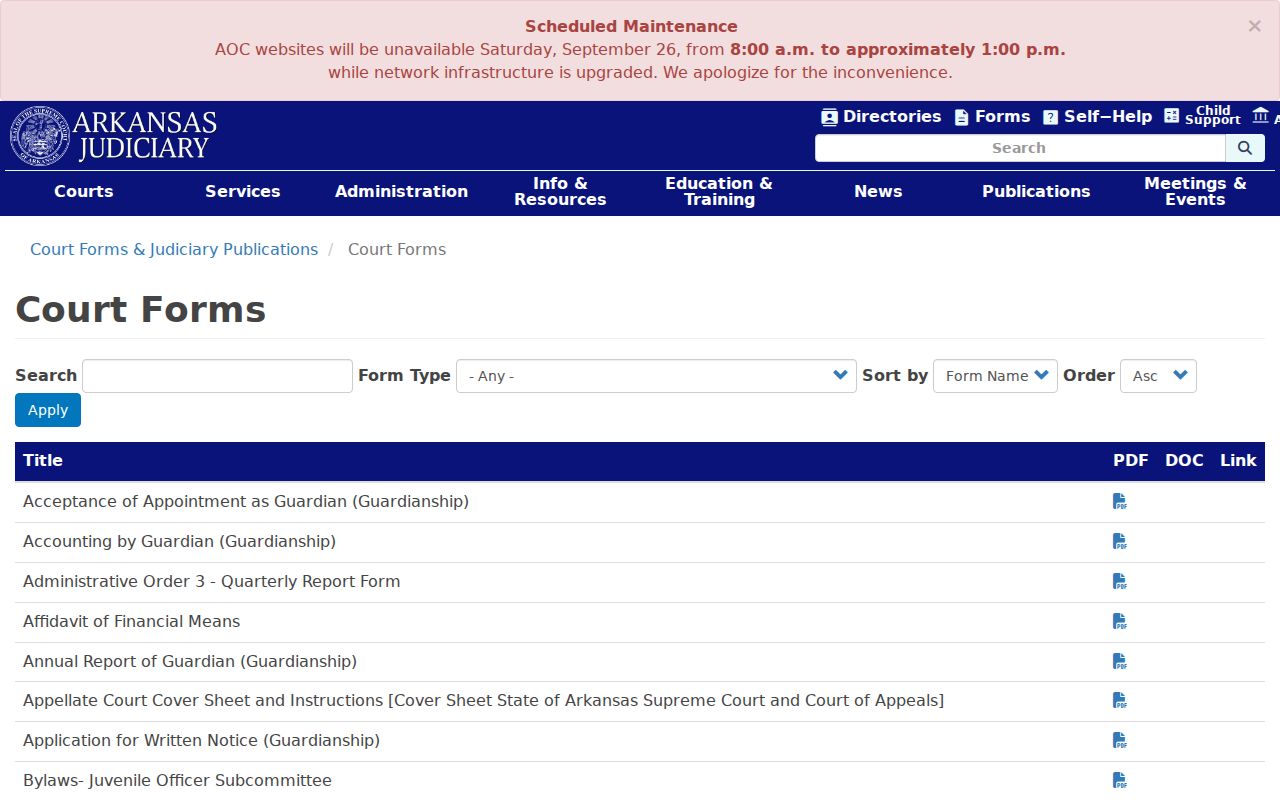
The forms catalog is a public source for court forms, not a warrant lookup or a recall request for any specific case. Arkansas Code §16-85-606 also sets a limit for a person charged only with an offense punishable by a fine of $100 or less, unless the court decides a warrant is necessary. That narrow provision is not permission to ignore a summons. The exact charge and court order control. Ask the clerk what the judge entered rather than applying a statute from a different case type.
- FTA
- Failure to appear at a required court setting; the result depends on the case and order.
- Recall
- A court action withdrawing or canceling its warrant.
- Quash
- A court order setting aside process; it does not itself decide the underlying charge.
- Capias
- A procedural term used in some contexts, not a single Arkansas public-search category.
Note: Arkansas publishes no universal recall form and no statewide code defining every bench-warrant status.
How Bench and Arrest Warrants Differ
A bench warrant usually follows a broken case obligation. An arrest warrant authorizes arrest on a criminal accusation after the required judicial process. The court and the stage differ, though either order can end in custody. For that separate probable-cause process, see Arkansas arrest warrants.
| Point | Bench Warrant | Arrest Warrant |
|---|---|---|
| Common setting | An existing case with a missed obligation or other permitted trigger | A criminal accusation supported through the statutory process |
| Issuing court | The court holding the case and setting the obligation | A judge or magistrate with authority over the matter |
| Next question | What appearance, payment, or compliance does the court require? | What charge and first-appearance terms are in the order? |
| Confirmation | Issuing clerk, then the serving agency | Issuing clerk, then the agency assigned to execute it |
A short label on a local list cannot tell you whether an order is a new arrest warrant or later bench process. Ask the issuing clerk. Request the order type and the next required action.
Arkansas City Courts Changed in 2012
Arkansas folded its city courts into District Courts on January 1, 2012. Each former city court can keep operating as a department unless abolished. Ordinance cases stay on the local docket. That is why you might hear someone say "municipal court" while the directory lists a District Court department instead. The switch did not merge anything statewide. There is still no single municipal warrant system in Arkansas and no one clerk covering every city. The Judiciary's City Courts overview lays out the transition and how the two tiers now relate. It clarifies the structure. The case itself stays local, so ask the clerk that court names for the warrant record rather than assuming the Circuit Clerk holds every city case.
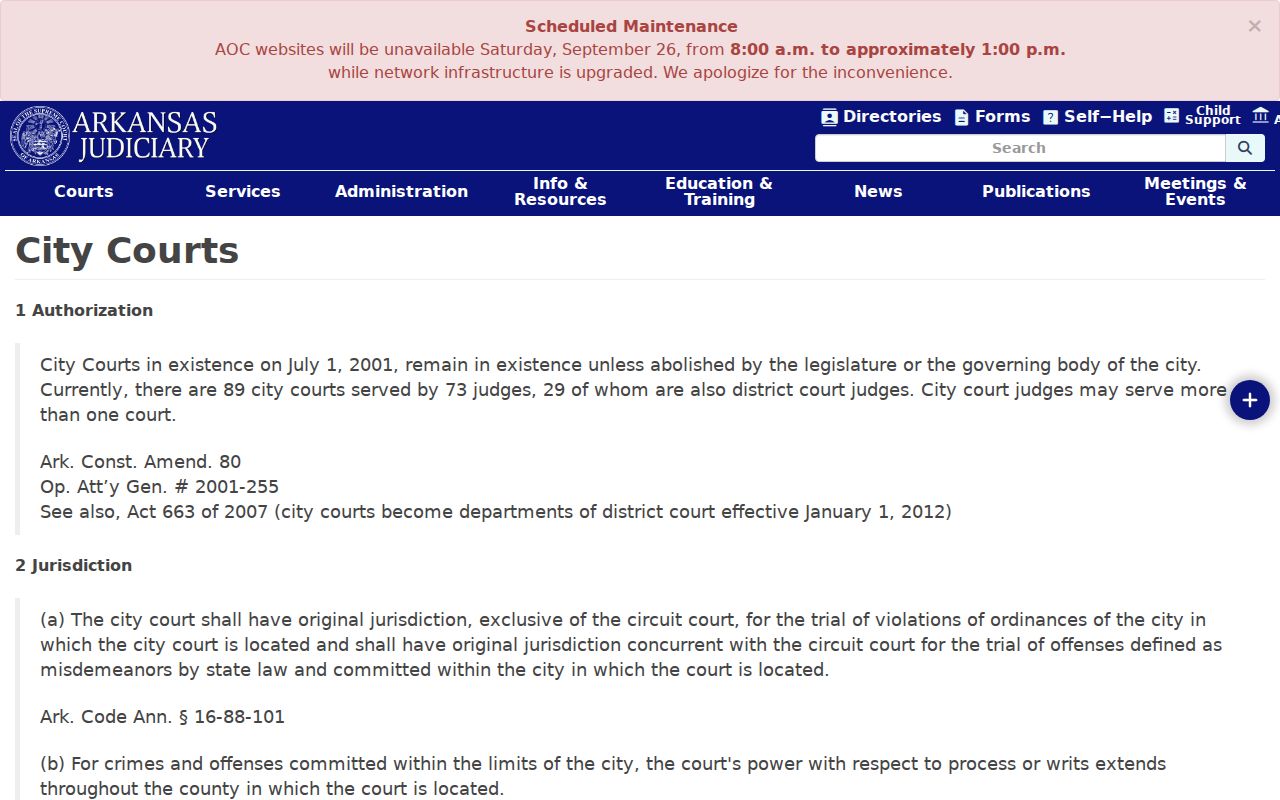
This Judiciary page explains court structure. It is not a statewide list of Arkansas city warrants. Use it to sort out the court tier, then confirm the case with the local clerk.
Arkansas Bench Warrants After Missed Dates
A missed setting leaves you guessing. Did the judge issue a bench warrant, reset the hearing, or enter something else entirely? One local example shows why a direct court check beats guessing. The Little Rock Traffic Court FAQ warns that a missed date, a skipped payment-plan installment, or an unfiled report can trigger FTA, FTP, or FTC consequences, and it tells people to contact the clerk promptly. That FAQ covers one traffic court, not a rule for every Arkansas District Court. It also says portal data may not update until the next business day, which is a timing note, not a promise the warrant comes off by then. So ask the issuing court directly. Find out whether an order exists and what it takes to fix it. A zero balance or a closed payment plan does not prove the warrant was withdrawn.
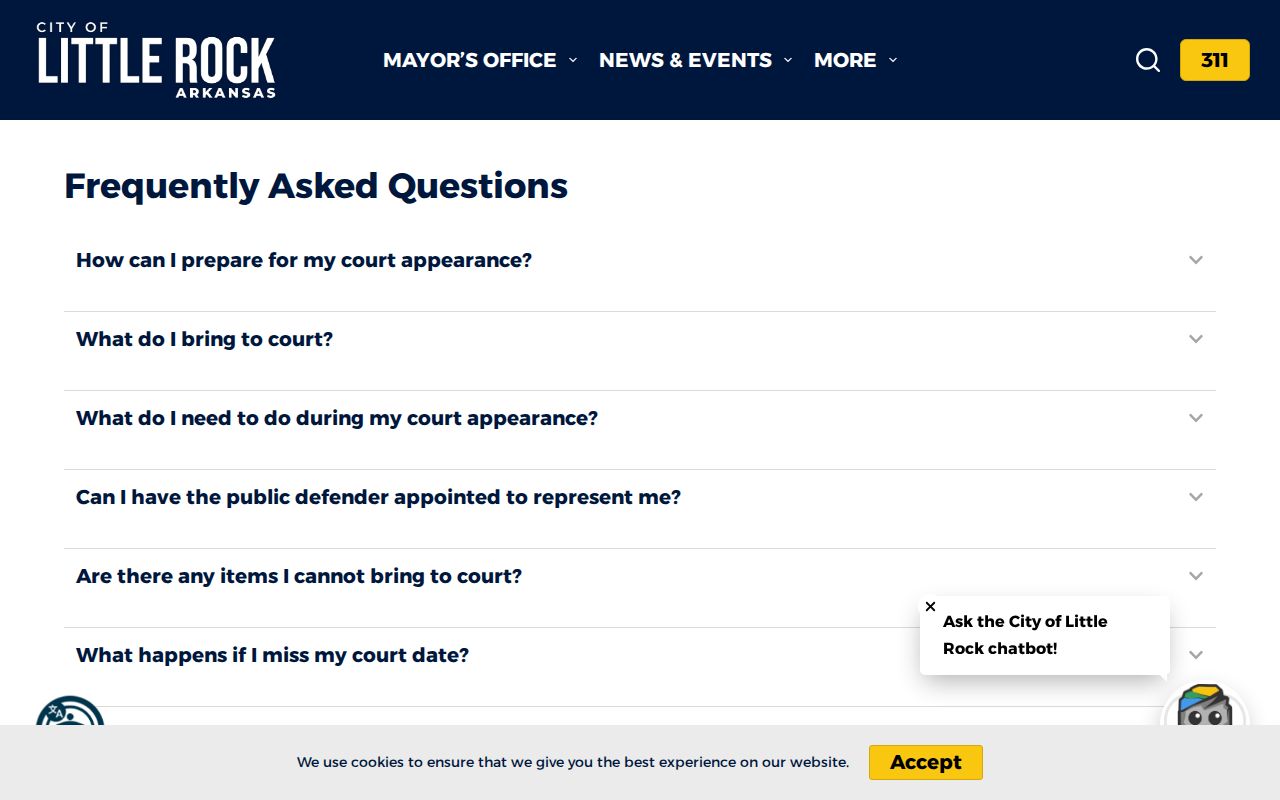
The page reflects a clerk-directed local process. Put the same questions to the court that set your own Arkansas obligation.
Clearing a Bench Warrant in Arkansas
Only the issuing court decides what happens next. You may have to appear in person, request a new date, seek a recall or quash order, or satisfy a bond condition. Arkansas publishes no universal walk-in counter and no statewide recall form. A lawyer can sometimes reach the court about a motion or a voluntary appearance where that fits. Confirm the exact case, court, and order first. Then follow the court's direction rather than assuming a payment or a surety bond settles the warrant on its own.
- Use the citation, case papers, or court search to identify the issuing District or Circuit Court and its clerk.
- Ask whether the warrant is active, what appearance or compliance is required, whether bond is set, and whether the sheriff received any recall.
- Ask whether the court accepts a motion, counsel-arranged appearance, or scheduled walk-in, and whether a judge must first set bond.
- After the court acts, confirm the docket entry and separately ask the sheriff or serving agency whether its service record was updated.
Caution: Do not assume that paying a fine or posting bond recalls an Arkansas bench warrant; confirm the judge’s order and the serving agency’s update.
Arkansas Bench Warrant Walk-In Checks
Walk-in rules are local, so call before you drive anywhere. The Pulaski County District Court warrant page shows what one county's process looks like for confirming and resolving District Court warrants. It is not a statewide surrender procedure. A different Arkansas court might send you to the clerk, the judge, the sheriff, the jail, or an appearance arranged through an attorney. Ask what identification or case information to bring. Ask where to report, whether you can schedule an appearance, whether counsel may contact the court, and whether bond has been set already. Juvenile matters and sealed records follow different rules. A quick call to the court also separates an active warrant from a reset date, a license consequence, or a record that simply has not updated yet.

The Pulaski page proves the point: the local court's own process is what governs. For another county, use the Arkansas county directory to reach that court and sheriff. Note: A local walk-in page sets no statewide bond amount, service location, or appearance rule.
Arkansas Courts That Issue Bench Warrants
Which court issued the warrant follows the case type. District Court takes many traffic, misdemeanor, and city-ordinance matters. Circuit Court handles felonies and other Circuit cases. Clerk arrangements vary by locality, so a misdemeanor or traffic record may sit with a Circuit Clerk, a District Court clerk, or a municipal clerk, while a felony Circuit case stays with the Circuit Clerk.
| Traffic or city ordinance | Start with the District Court or city-court function that set the date; confirm which clerk holds that docket. |
|---|---|
| Felony or Circuit case | Contact the Circuit Clerk for the court record, then ask which sheriff or officer has the warrant. |
| Juvenile matter | Contact the juvenile court or counsel; confidentiality rules limit ordinary public access. |
| Service status | Ask the sheriff or designated agency that received the order; a clerk’s docket and service record can differ. |
Search by county through the county directory, then split the work: the issuing court answers the legal status, and the serving agency answers execution details. No single sheriff list or Circuit Clerk portal settles every Arkansas bench-warrant question. Note: Court and sheriff confirmation are separate steps because each office keeps a different part of the warrant record.
Arkansas Bench-Warrant Record Limits
Arkansas offers no public statewide bench-warrant or capias search, and no verified public bench-only list exists either. Search ARCourts can locate a case, but it is not a warrant-status database. Sheriff portals cover one county each and can be incomplete or stale. An empty online result never proves a warrant does not exist. Confirm with the court before trusting a result as current. For court-held records, ask about access under Administrative Order No. 19 (AO19), including any sealing or confidentiality limit. Arkansas FOIA reaches agency records a sheriff holds, but a FOIA request cannot replace a current ruling from the issuing court. Juvenile records carry separate confidentiality protections. If a record is not online, ask the clerk how to request a public copy and whether the order or supporting material is restricted.
- Served
- The officer reports that the warrant was executed; confirm the court’s next setting.
- Recalled
- The issuing court withdrew the warrant; ask whether the serving agency received the order.
- Bond forfeiture
- A court process after a released person fails to appear; the surety and defendant may have separate obligations.
Arkansas uses no uniform public status-code list and no statewide warrant-number pattern. Read the actual docket entry and order, then verify the current service record with the agency holding it.